Morsand
Digitizing a 149-page manuscript about my ancestral village.
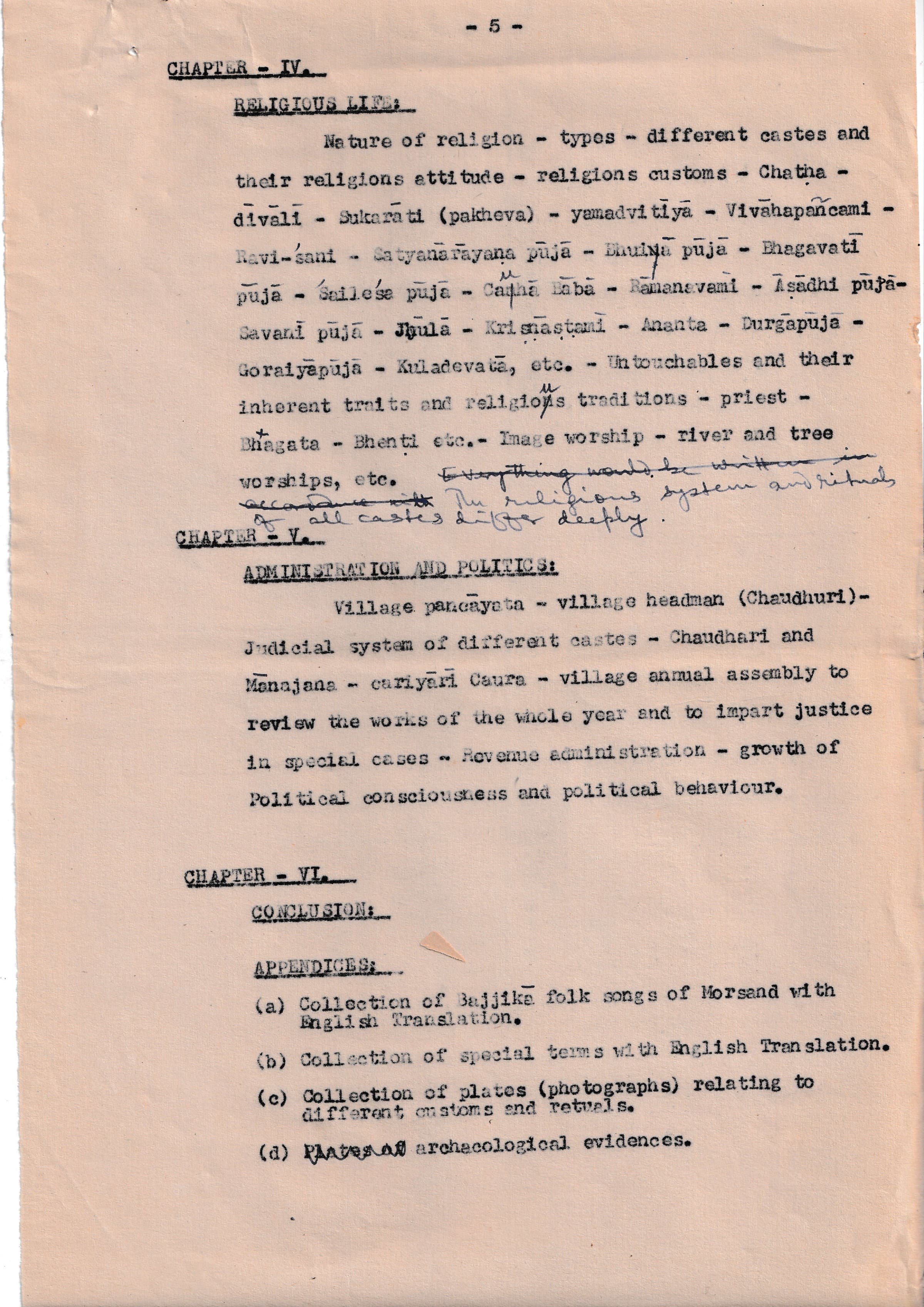
Original manuscript
CHAPTER IV RELIGIOUS LIFE Chatha - divali - Sukarati (pakheva) - yamadvitiya - Godhan - Makara Sakranti - Sripancami - Sivaratri - Dola (Holi) - Ramanavami CHAPTER V ADMINISTRATION AND POLITICS Village pancayata - village headman (Chaudhuri) - Primary judicial system CHAPTER VI CONCLUSION APPENDICES 1. Folk songs of Morsand 2. Special terms 3. Photographic plates 4. Archaeological evidences
OCR + Claude transcription
My dad showed me a stack of yellowed manuscripts — 20 years of research by Prof. Harishchandra Satyarthi documenting our village Morsand in Bihar. 149 pages covering the village's history from the 17th century to 1947, with references to archaeological evidence dating back to 500 BCE. The pages were a mix of typewritten English and handwritten Hindi. Family members had tried to transcribe them manually for years and given up.
I built a pipeline. First, high-resolution scans of every page. Then Google Cloud Vision for the initial OCR pass — it handles typewritten English well but struggles with the Hindi handwriting and the degraded paper quality. The real work happens in the second pass: Claude cross-references the OCR output against the original scans, corrects errors, translates Hindi passages, and maintains consistency in names, dates, and places across the full manuscript.
Each page took 60-80 seconds to process. The entire 149-page manuscript was digitized in a few hours — work that had resisted manual effort for years.
The content itself is remarkable. It maps migration genealogies, documents feudal labor systems under the zamindari system, records folk songs that exist nowhere else in writing, and traces evidence of continuous habitation at the site going back millennia. It's now published at morsand.com — the first time this research has been accessible to anyone outside our family.
OCR · Claude · Google Cloud Vision · Heritage